
DU Project Spotlight: Bear River Estuary – Washington
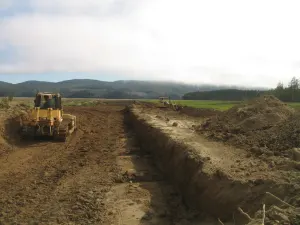 Dike removal at the Porter Unit summer 2013
The Bear River Estuary Restoration -Willapa National Wildlife Refuge project will remove approximately five miles of existing dike, 38 culverts, two fish ladders, two tide gates, and two foot bridges, and reconnect 18 estuary channels; resulting in up to 500 acres of restored estuarine habitat.
The resorted habitat includes reconnection of stream channels to the estuarine environment, open water, intertidal flats, and salt marsh. The goal of habitat restoration is to help rebuild a healthy, functioning natural system. Restoration will benefit a diverse array of species including chum and Chinook salmon, shorebirds, waterfowl and other migratory birds, as well as contribute to the overall health of Willapa Bay.
In 2007, the Refuge and Willapa Bay Regional Fisheries Enhancement Group began to develop plans for the Bear River Estuary Restoration. Engineering designs and compliance documents were completed in 2010.
The five phases in the Bear River Estuary Restoration Project are:
Phase 1 – Dike and fish ladder removal at Lewis Unit to restore 160 acres of estuary.
Phase 2 – Dike and fish ladder removal at Porter Point to restore 145 acres of estuary.
Phase 3 – Design interior dike within the Riekkola Unit.
Phase 4 – Rebuild interior dike within the Riekkola Unit.
Phase 5 – Removal of the outer dike and tide gate at the Riekkola Unit to restore 200 acres of estuary.
Restoration in the Lewis Unit was completed in 2012 and the majority of Porter Point Unit was completed in 2013. To date two fish ladders, two tide gates, and over three miles of dike were removed and twelve streams/channels were reconnected.
Post construction monitoring has begun. Phase 2 will be completed during 2014. Phases 3, 4 and 5 will be implemented as funding permits.

